
AI-Discoverable Metadata: What It Is, Why It Matters, and How Brands Should Use It
AI-Discoverable Metadata: What It Is, Why It Matters, and How Brands Should Use It
As search evolves beyond keywords and into a world driven by generative AI discovery, brands are entering a new era of visibility. No longer is it enough to “rank” on Google alone. Today, information is surfaced by AI assistants, chatbots, search overlays, recommendation engines, and contextual knowledge panels — many of which rely on structured signals known as AI-discoverable metadata.
At Branding & Buzzing, we’ve been watching this shift closely. Here’s what brands, marketers, restaurants, tourism organizations, and consumer product companies need to know right now.
What Is AI-Discoverable Metadata?
AI-discoverable metadata refers to structured information that helps artificial intelligence understand, categorize, and confidently surface your content. Instead of guessing what your website, video, menu, or product is about, AI can read metadata like:
- Product attributes
- Brand descriptions
- Menus and dish details
- Ingredients and allergens
- Price ranges
- Geolocation context
- Business categories
- Review sentiment
- Social proof indicators
Think of it as nutrition labels for your digital content. Without metadata, AI crawls and infers. With metadata, AI knows.
Why This Matters Now
As platforms shift toward answer-style results — not links — brands risk being invisible if AI can’t confidently index their information.
Three trends make this urgent:
AI Search Adoption Is Exploding
Tools like Perplexity, ChatGPT Search, Gemini, and Copilot are replacing first queries.
SEO Is Becoming Entity-Based
Ranking is being replaced by knowledge representation.
Consumers Expect Instant Answers
“How spicy is this dish?” “Does this bar offer mocktails?” “Is this product gluten-free?”
AI is answering these questions using metadata — not your homepage hero image.
Where AI Pulls Metadata From
AI crawls dozens of sources, including:
✔ Website schema markup
✔ Structured product feeds
✔ Menu databases
✔ Google Business Profiles
✔ Social platform context tags
✔ Ingredients and nutritional fields
✔ E-commerce product attributes
If you don’t provide these, AI pulls secondary sources — or worse, guesses.
Examples in the Food & Beverage Category
- Restaurants
- Cuisine tags
- Dietary attributes (vegan, halal, gluten-free)
- Price range
- Ambiance descriptors
- Region or neighbourhood signals
- CPG + Beverage Brands
- ABV and flavour profiles
- Tasting notes
- Packaging sizes
- Food pairing tags
- Retailer availability
- Tourism & Events
- Accessibility features
- Audience type (family-friendly, nightlife, culinary)
- Seasonality
- Ticket tiers
These attributes are increasingly referenced in AI-generated recommendations.
How to Implement AI-Discoverable Metadata
1. Add Structured Schema Markup
Use schema.org formats for:
LocalBusiness
Product
Event
Recipe (yes — cocktail and food brands can use this!)
MenuItem
DietaryRestriction
We implement this frequently across restaurant and beverage client sites.
2. Build Rich Product Attribute Tables
A single paragraph description doesn’t cut it. AI loves:
ABV
Varietal
Ingredient list
Region
Production method
Certifications
The more structured, the better.
3. Update Google Business Profiles
Every field is metadata:
Highlights (women-owned, wheelchair accessible)
Service areas
Dietary filters
Opening hours
Menu links
AI scrapes this constantly.
4. Add Entity-Based Language to Your Site
AI needs context like:
“Branding & Buzzing is a food marketing agency based in Toronto and Prince Edward County that specializes in experiential activations, influencer programs, and alcohol marketing compliance.”
Don’t assume it knows — tell it.
5. Tag Images Intelligently
ALT text is now functionally metadata.
Bad: “plate of food”
Better: “Toronto takeout Nashville hot chicken sandwich with sesame slaw and brioche bun”
This trains AI what you’re known for.
How AI Uses Metadata to Recommend Brands
AI looks for confidence signals. For example:
“Best Ontario bourbon tasting events near me?”
If your metadata mentions:
Ontario
bourbon
tasting
events
date
location
You have a chance to surface.
Without it, you rely on luck.
The Competitive Advantage
Brands who adopt AI-discoverable metadata early will:
Surface in AI search recommendations
Appear in multi-platform knowledge graphs
Be referenced in AI trip planning tools
Rank in “best of” AI-generated lists
Win visibility without paying for ads
This is the modern edge.
What We’re Doing at Branding & Buzzing
We’re actively:
- Building structured metadata for clients
- Creating menu + product attributes for AI indexing
- Training influencer content with entity language
- Preparing blogs for AI comprehension (not just humans)
- Advising on schema strategy for restaurants, beverage brands
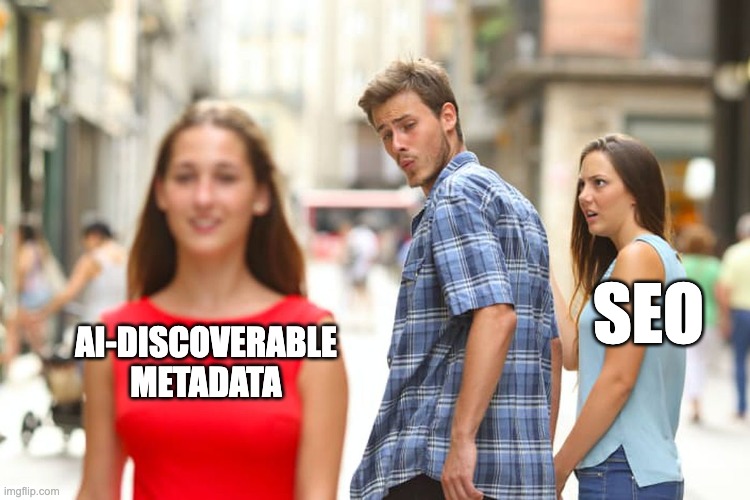
It’s no longer just SEO — it’s AI Optimized Identity.
How to Get Started
Begin with three simple actions:
Add JSON-LD schema to your About, Product, Menu, and Event pages.
Ensure every product has structured attributes.
Train your social posts to use entity language (“Ontario bourbon tasting event,” not just “fun night!”)
Small changes create big AI visibility.
The Bottom Line
Metadata is how AI:
Understands you
Classifies you
Connects you
Recommends you
If you haven’t defined your digital identity, AI will define it for you — and you may not like the result.
Want Help Implementing This?
Branding & Buzzing offers:
AI metadata audits
Schema strategy
Menu and product attribute programming
Entity-based content planning
AI search optimization
We’ve already been doing this quietly for clients. Now the market is ready.
AI doesn’t find what you say.
It finds what you structure.