

 What Leon’s Bagels NYC Gets Right About Lifestyle-Led Food Branding
By Sean Beckingham, Branding & Buzzing
I recently went down a rabbit hole on the Instagram account for Leon’s Bagels NYC, and it’s one of the best examples I’ve seen of a food brand fully understanding who it is and where it lives.
This isn’t just a bagel shop posting sandwiches.
It’s a neighbourhood brand telling a story.
As someone who builds food and beverage brands for a living at Branding & Buzzing, I started looking at it through a different lens:
What are they doing right?
What does this actually cost?
And why does it work so well?
1. They’re Selling a Lifestyle — Not Just a Bagel
View this post on Instagram
Leon’s doesn’t just show product. They show:
•The neighbourhood
•The people
•The street corners
•The fashion
•The culture
Their images and videos use a consistent filter and tone. It feels cinematic. Rugged. New York.
Some of their fashion shoots don’t even feature bagels.
Let that sink in.
They’ve built a fashion-forward collection shot purely for vibe. The styling mirrors the grit of NYC — textured fabrics, natural light, street energy. It aligns with the vintage photography they post. The whole thing feels cohesive.
That’s brand building.
2. They Invest in B-Roll and Real People
View this post on Instagram
You can tell they’ve hired actors and creators for lifestyle B-roll.
The “in the moment” shots feel natural — but they’re intentional. That only happens if:
•You have someone in-house capturing content daily
•Or you’ve retained a content creator to live inside the brand
They’ve even partnered with a creator who launched a separate channel, “Nothing Fancy,” interviewing customers. That extends the brand beyond product into community storytelling.
This is layered content strategy:
•Core brand feed
•Community interviews
•Fashion drops
•Milestone highlights
•User tags
It’s not random. It’s structured.
3. They Use Vintage & Archival Photography Brilliantly
View this post on Instagram
One of my favourite moves? You bet.
They’ve clearly sourced or purchased old film collections — including a jazz band shot on film.
What a genius way to build tone.
Instead of trying to artificially recreate nostalgia, they’ve leaned into real archival visuals. Buying private photo collections or licensed vintage work gives authenticity immediately.
That’s something more brands should consider.
You don’t always need to create everything.
Sometimes you curate culture.
4. The Food Is Shot Two Ways (Smart Move)
View this post on Instagram
Their food content falls into two buckets:
1. The Classic Reveal
•Cheese oozing out of a sliced bagel
•Tight, craveable, sensory video
2. The Street Story
•Bagels eaten curbside
•On stoops
•In hands
•Actually in New York
One builds appetite.
The other builds identity.
The balance is key.
5. They Engineered “Moments”
View this post on Instagram
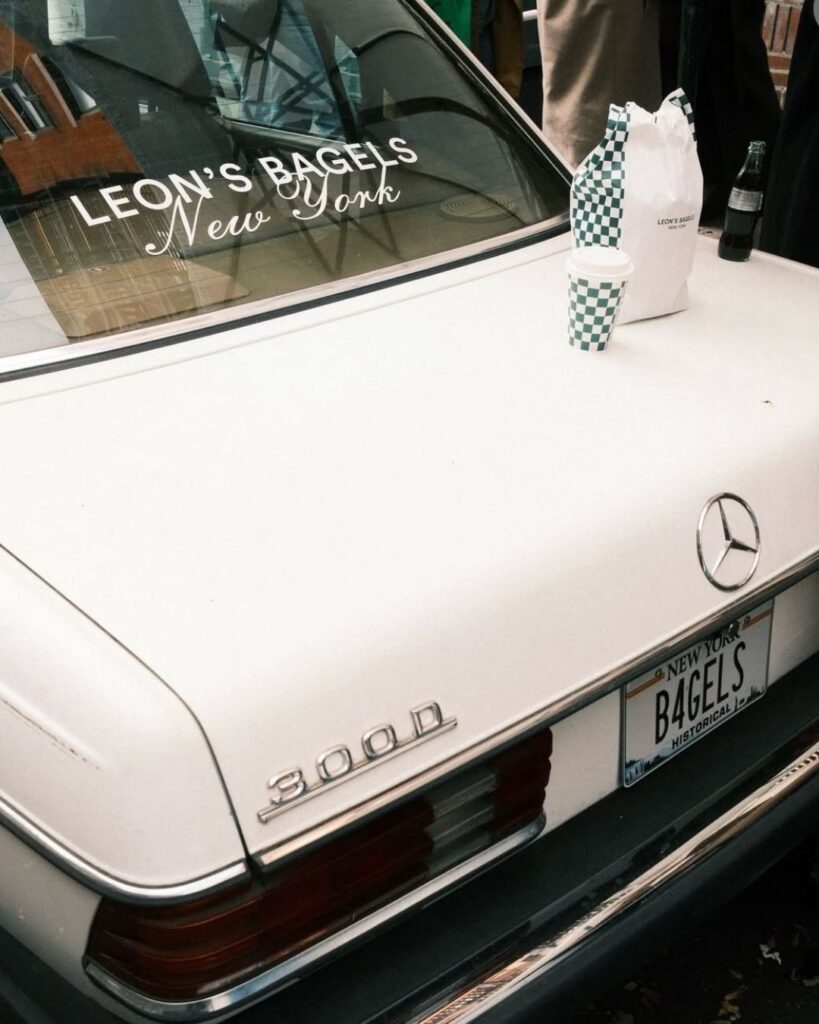
There’s a vintage car parked in front of the shop.
Is it there every day? Maybe.
Is it there for photos? Almost certainly.
That’s not accidental. That’s environmental branding.
It becomes:
•A content prop
•A recognisable visual anchor
•A social tagging magnet
They also pin milestones and events in Stories — reinforcing brand progression.
And they get tagged constantly.
That doesn’t happen by accident.
So… What Are They Likely Spending Per Year?
View this post on Instagram
Let’s break it down.
They average roughly 10 posts per month. That’s 120 posts per year.
But it’s not just 120 posts. It’s:
•Fashion shoots
•Lifestyle model shoots
•Food styling
•Archival licensing
•On-the-ground daily content
•Community interviews
•Editing with consistent grading
•Social management
Here’s a realistic annual estimate if done professionally:
Estimated Annual Content Investment
Quarterly lifestyle shoots (4x per year)
$8,000–$12,000 per shoot
= $32,000–$48,000
Fashion collection production (1–2 per year)
$15,000–$30,000
Ongoing in-house content creator (part-time)
$40,000–$70,000
Archival / vintage image licensing
$5,000–$15,000
Editing, grading, strategy & management
$20,000–$40,000
Likely Total Annual Investment:
$110,000 – $200,000
Could it be done for less? Sure.
But the consistency suggests real structure behind it.
Why This Matters for Food Brands
At Branding & Buzzing, we constantly tell clients:
You are not just selling food.
You are selling a feeling.
Leon’s proves that when:
•Your filter is consistent
•Your neighbourhood is part of the story
•Your fashion matches your food
•Your content feels cultural, not commercial
You move beyond being a shop.
You become a brand.
The Real Lesson
The most important thing they’ve done?
They’ve made their Instagram feel like it’s happening in real time.
That’s the hardest thing to fake.
It likely works because someone is living inside that content daily — capturing moments, reacting to culture, interviewing customers, and maintaining tone.
That’s not just content creation.
That’s brand stewardship.
If you’re a restaurant or food service operator reading this, ask yourself:
•Are you documenting your neighbourhood?
•Are you investing in lifestyle beyond product?
•Do you have a visual anchor?
•Are you building culture or just posting specials?
There’s a difference.
And the brands that understand that difference win.
—
Sean Beckingham
Partner, Branding & Buzzing